We had not even reached the cottage yet.
It was Friday morning. A bunch of us were heading to a cottage for the weekend with all our kids. One of the friends in the group owns Windsor Slingshot Rental. He was in one of the other cars on the way up, which is why he texted me. We had not reached the cottage when the message came through.
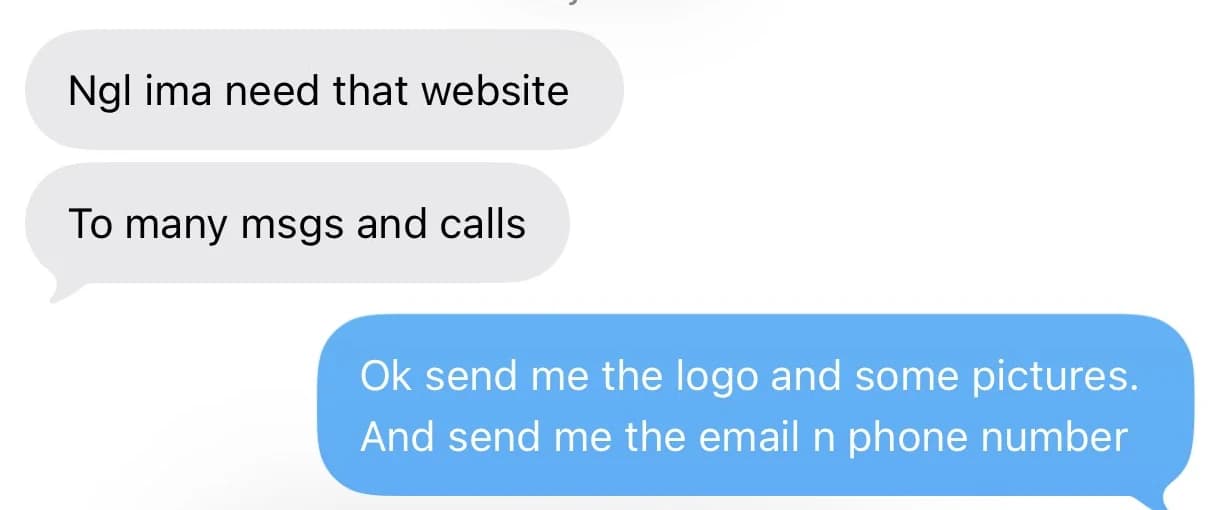
The message was short: he needed the website because there were too many messages and calls. We asked him to send the logo, some pictures, the email, and the phone number so we could get started.
On the surface, this sounded like a website project. Demand was already there. People knew about the Slingshot, wanted to rent it, and were reaching out. The problem was that every question, every date check, and every booking started by interrupting the owner.
He did not need more people calling him. He needed the website to handle everything that should happen before a call was necessary.The Phone Call Was Carrying the Entire Business
When someone wanted to rent the Slingshot, the owner had to answer the same sequence manually. What packages are available? How much time do I get? Is my date open? What licence do I need? Is there a deposit? What happens after I request it?
None of those are bad questions. They are exactly what a customer should ask before renting a three wheel roadster with a manual transmission. But if the phone is the only place those answers exist, the owner becomes the website, booking calendar, FAQ page, and notification system all at once.
That arrangement works right up until the business gets busy. Then success starts stealing evenings, weekends, and cottage drives one notification at a time.
A Brochure Website Would Have Made the Same Phone Ring
We could have built a good looking page with a photo, phone number, and a bright red button that said “Call to book.” It would have looked more professional. It also would have sent every interested customer back into the exact bottleneck we were hired to remove.
The test for this project was simple: after visiting the site, could a customer send a complete, valid rental request without asking the owner the same five questions first?
That changed the scope. The public side needed to explain the experience, packages, requirements, deposit, and booking process. Then it needed to collect the package, preferred date, pickup time, and contact details in one structured request.
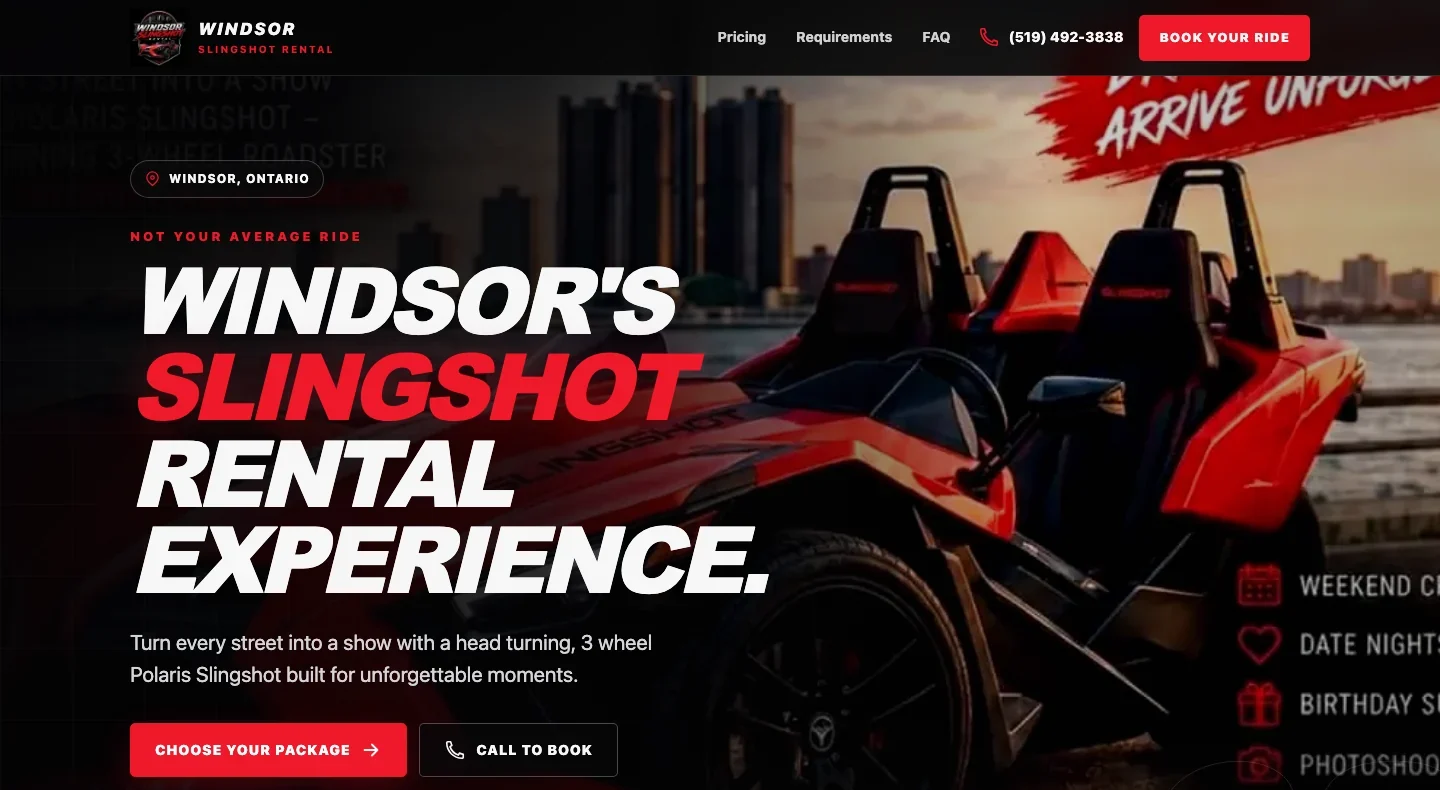
You can see the finished public experience at windsorslingshot.com, or go directly to the rental booking request.
The Website Was Only Half the System
A form that only sends an email does not manage availability. The booking workflow had to understand the same rules the owner was applying manually.
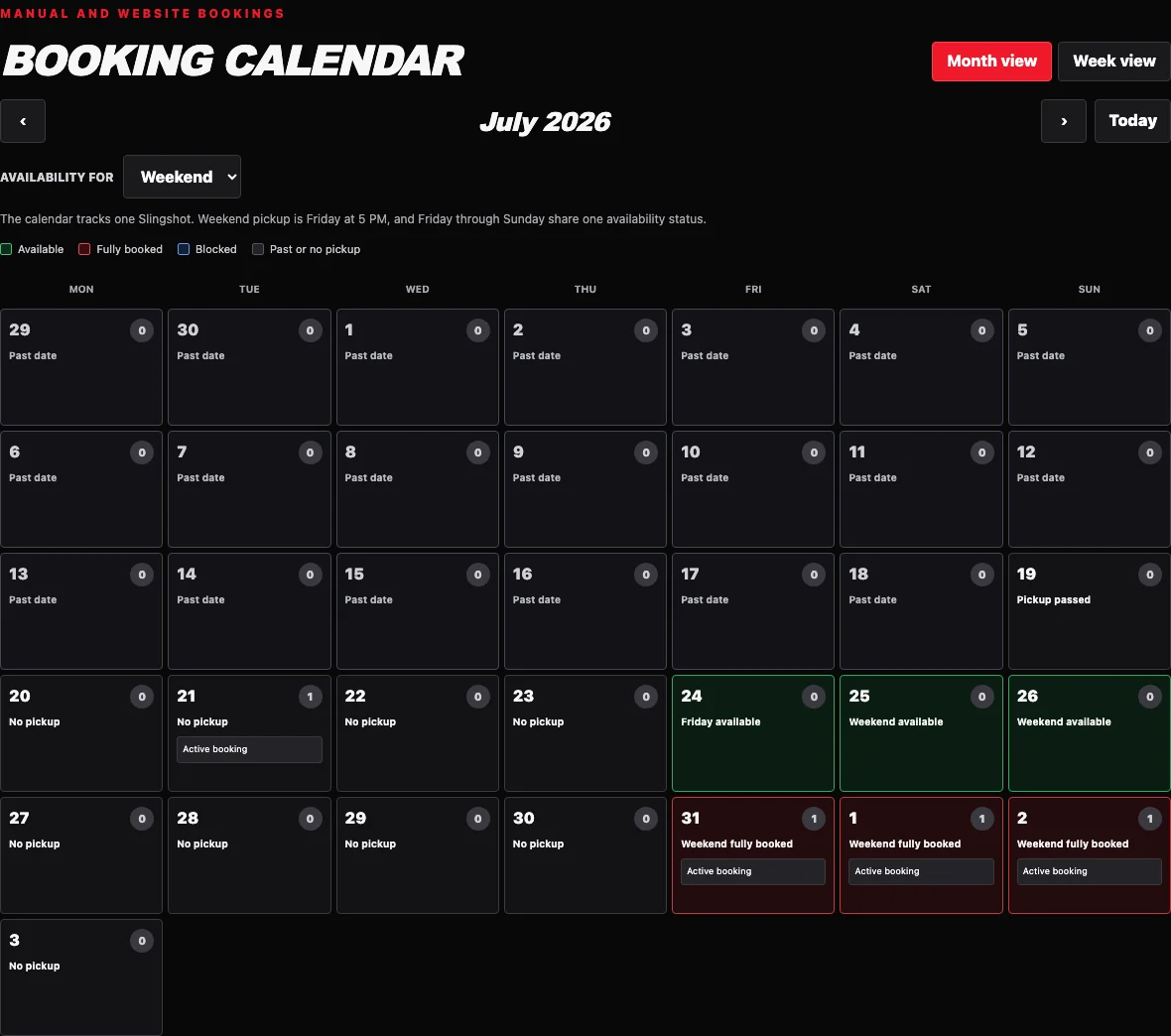
A two hour rental, half day, full day, and weekend package each occupy time differently. Weekend pickup starts Friday evening and runs through Sunday. Turnover time matters. Manual bookings and manager blocked dates matter. Two people cannot be promised the same vehicle because two forms arrived close together.
The final availability check happens on the server against the actual booking records and operating rules. The browser helps a customer choose a date, while the server confirms that the requested time is still available before accepting it.
What the Manager Needed Behind the Scenes
The owner needed one place to see what was happening without reconstructing the week from calls, texts, and memory. The private manager portal now provides:
- A package aware booking calendar. Availability reflects the real rental interval, not just a coloured square on a date.
- Manual and website bookings together. A booking taken by phone still reserves the same inventory as one submitted online.
- Manager blocks. The Slingshot can be made unavailable for maintenance, weather, personal use, or any other operational reason.
- Booking status controls. Requests move through a clear lifecycle instead of disappearing into a message thread.
- Edits, cancellations, and history. Important changes are recorded so the manager can see what happened and when.
- Customer notifications. The system can send the right instructions as a booking moves forward without making the owner rewrite the same message every time.
Automation Should Give the Owner Time Back
A Slingshot rental is personal. Customers have questions, special occasions, weather concerns, and plans that do not always fit perfectly into a dropdown. The system needed to protect that experience, not make it feel robotic.
The system handles the repeatable part so the owner has more time for the conversations that deserve a person. Customers can understand the offer, check the requirements, choose a package, and submit the details without waiting for a callback. The manager still makes the decisions without having to answer every basic question first.
The system reduces unnecessary interruptions without removing the owner from the customer relationship. He stays involved where his judgment matters, while the website handles the questions and details that should not require a call every time.
Two Text Messages Can Reveal the Real Problem
“I need a website. Too many messages and calls.” That was enough to identify the symptom. The real work was tracing it back to the operational problem and building the right system around it.
Not every project needs a conference call, a discovery workshop, and a hundred meetings before work can begin. Some projects need a deeper discovery process. Others give us enough information to start in two text messages. We do not add meetings to make the process look more complicated or to justify the price.
In simple terms, we make websites for businesses. Our experience lets us begin with informed assumptions about how the business operates, what the owner needs, and what customers are looking for. We then confirm the decisions that materially affect the operation. AI can help with production, but we do not leave business judgment to ChatGPT or Claude Code.
That is the difference between an experienced business website project and a ten minute AI site someone's friend or cousin can publish. Getting a page online is the easy part. Knowing what it needs to say, how it should convert cold and warm leads, and how it should support the business takes experience. We also structure every page so Google can crawl and index it properly, giving the business an opportunity to earn more search visibility over time.
If your business is growing but every new customer adds another manual conversation, another calendar check, or another chance for something to get missed, you may need one system designed around how your business actually runs.
That is what we build at NeuroDesk. If your Windsor or Essex County business has a manual process that keeps following you into the weekend, explore our business automation and custom software work, or email hello@neurodesk.io.